Menu
Close
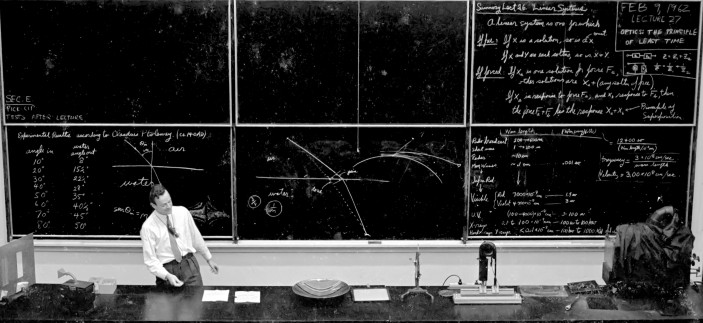
As you move into higher levels of math, what you learned at the basic levels doesn’t disappear. It becomes a small moving part inside a much larger system of interpretation and calculation. The same is true of creativity. The difference is in volume and density of weight that you can hold in your mind. And as we can see in most any creative output, there are many variables to consider regardless of weight.
With music we have tempo, instruments, instrumentation, rhythm, language, etc.
With writing we have characters, story structure, environment, etc.
With businesses we have products, services, people, capital, systems, etc.
Early math is taught in pieces. Algebra introduces variables—a, b, x. Geometry introduces space, shape, and proportion. Each subject feels separate. You learn rules in isolation: solve for x, find the area, follow the steps. Creativity begins the same way. You learn tools individually—language, composition, color, rhythm, structure. You practice technique and imitation. Progress feels linear, measurable, and contained.
Then the frame widens. With calculus, variables stop being fixed and begin to move. What matters is no longer just the answer, but how things change in relation to one another over time. Math becomes less about steps and more about behavior. Creativity matures in the same way. Voice interacts with structure. Experience interacts with context. Meaning emerges from relationships rather than from isolated components.
At more advanced levels of math—nonlinear equations and dynamic systems—the tools of calculus don’t vanish. They become parameters inside larger models. Small changes can reshape the whole. Outcomes can’t be predicted in a straight line. This is where heavier creative work lives. The process itself remains linear: you show up, work through drafts, make decisions, revise. But insight arrives nonlinearly, through synthesis, pattern recognition, and sudden reorganization. Both are required.
Part of the difficulty in both math and creativity is that you are working inside an infinite field of possibilities. You cannot explore it all; you have to move through it. Linear structure is how progress happens. Nonlinear insight is how meaning appears. One without the other collapses—either into chaos or into rote execution. Math doesn’t choose between them, and neither does creative work. You move forward step by step, knowing the step itself isn’t the breakthrough. The structure exists to support what cannot be predicted. We apply discipline to make room for emergence.
- Richard Feynman
I don't agree with Feynman that math is the only language through which we can come to know the deepest beauty of nature. But I do agree there is a language and that we must aim to understand it if we wish to perceive it more fully, though never fully.